

Construction sites are treasure troves for thieves. Heavy equipment worth hundreds of thousands of dollars. Copper wiring that can be stripped and sold within hours. Power tools left unattended overnight. Materials stacked neatly, waiting to disappear into the back of a truck.
The average construction site theft costs between $30,000 and $400,000, not including project delays, insurance premium increases, and the administrative nightmare that follows. Yet many site managers continue making the same critical security mistakes: leaving their projects vulnerable to theft, vandalism, and liability issues that could shut down operations entirely.
If you're managing a construction project in Northern Virginia or Richmond, you can't afford to cut corners on security—especially if you're responsible for construction site security Northern Virginia decision-making. Here are seven mistakes you might be making right now, and exactly how to fix them before they cost you.
Mistake #1: Skipping the Risk Assessment
The Problem: You've installed some cameras, put up a fence, and called it good. But without understanding your specific vulnerabilities, you're essentially guessing at security: and hoping for the best.
Every construction site is different. A residential development in Richmond faces different threats than a commercial high-rise in Arlington. Your site's location, the project phase, the value of equipment on-site, and even nearby crime patterns all dictate what security measures you actually need.
The Fix: Start with a comprehensive risk assessment before implementing any security measures. Walk your entire site and identify vulnerable access points, high-value equipment locations, and areas that provide cover for unauthorized individuals. Consider your site's unique characteristics: Are you near a highway with easy escape routes? Do you have multiple access points that are difficult to monitor? What's the crime history in the immediate area?
Document everything. This assessment becomes your security blueprint: and it should be updated as your project progresses and new risks emerge.
Mistake #2: Treating Access Control as an Afterthought
The Problem: If anyone can walk onto your site without being challenged or logged, you don't have security: you have an invitation. Many construction sites rely on a single unlocked gate or a chain-link fence that's easily scaled. There's no accountability, no record of who was on-site when equipment went missing.
The Fix: Implement layered access control measures starting at your perimeter. Install security gates with electronic access systems: key fobs, swipe cards, or biometric scanners for sensitive areas where you're storing high-value materials like copper wiring or specialized equipment.
Create a single point of entry monitored by security personnel. Require all vendors, subcontractors, and visitors to sign in and out. Change digital access codes regularly, especially when staff turnover occurs. For overnight protection, consider a staffed security checkpoint that controls all traffic flow.
This isn't just about preventing theft: it's about knowing exactly who was on your site if an incident occurs.
Mistake #3: Installing Cameras Without a Monitoring Strategy
The Problem: Those CCTV cameras you installed? They're recording footage no one watches until after something gets stolen. Cameras positioned poorly, obstructed by equipment, or lacking night vision capabilities create blind spots criminals exploit.
The Fix: Deploy high-definition surveillance cameras strategically at all entry and exit points, material laydown areas, equipment storage zones, and along your entire perimeter fence using modern security equipment built for low-light conditions and harsh jobsite environments. But here's what matters most: active monitoring.
Cameras become effective when trained security personnel monitor feeds in real-time and respond immediately to suspicious activity. Motion-detection alerts can notify guards of unauthorized access after hours. Night vision and infrared capabilities ensure coverage doesn't disappear when the sun goes down.
Download and secure all CCTV footage promptly when incidents occur: this evidence becomes critical for insurance claims and law enforcement investigations. Pair that with detailed reporting from on-site security so every alarm, patrol check, and incident is documented clearly—time-stamped, consistent, and actionable.

Mistake #4: Leaving Your Site Unattended
The Problem: Your site shuts down at 5 PM. Equipment sits vulnerable for the next 12-15 hours. No one's there to challenge trespassers, respond to alarms, or call law enforcement. This is when most theft occurs: in that unguarded window between shifts.
The Fix: Hire professional security personnel with construction site security expertise to maintain a presence at all times. Prioritize DCJS-certified security guards who are trained to enforce site rules, manage access, and document incidents correctly. This isn't optional: it's essential.
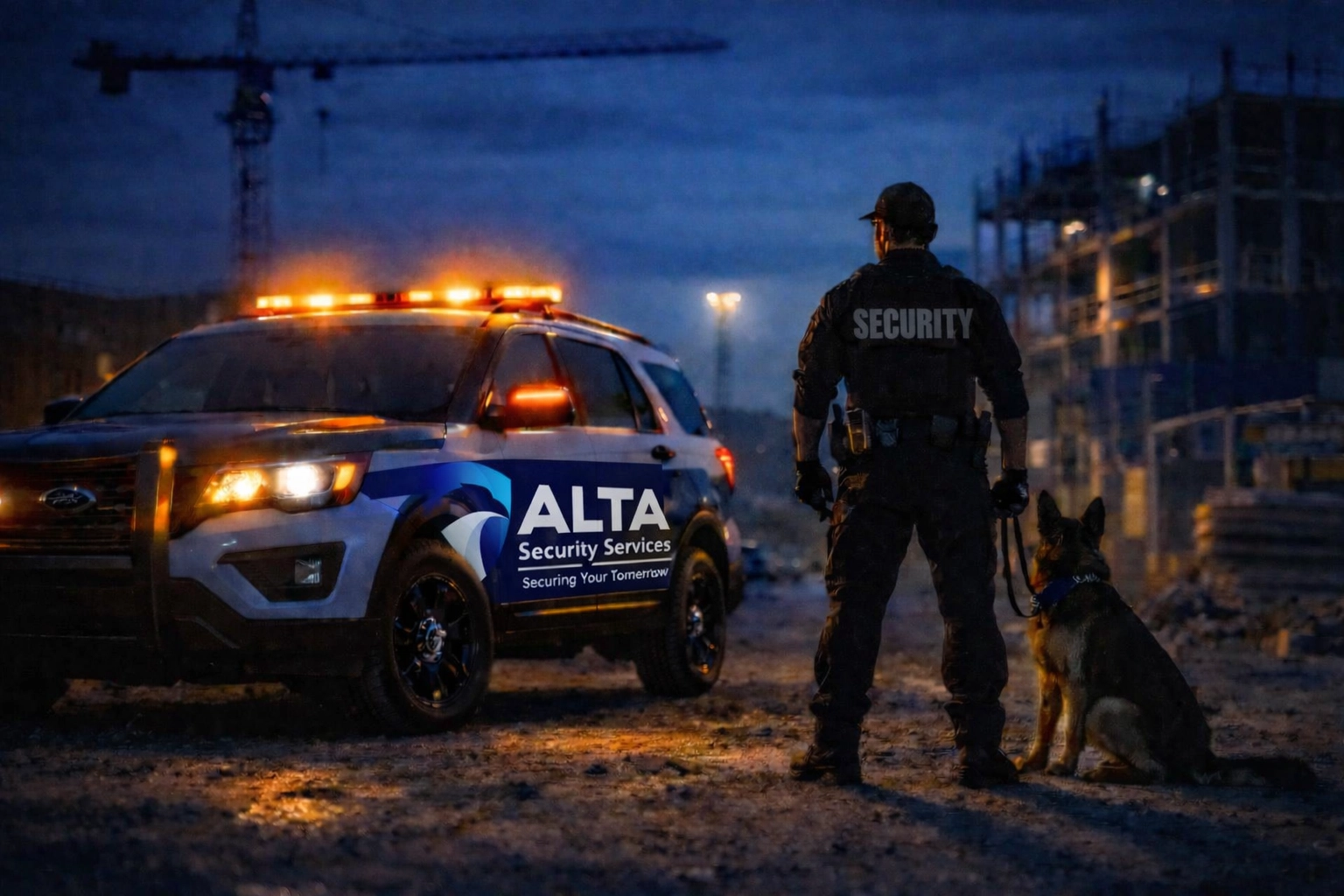
Static guards can control access points and monitor activity. Mobile patrols cover large sites at random intervals, making it impossible for thieves to predict guard locations. For after-hours security, consider K9 units: the presence of a trained security dog is one of the most effective deterrents available.
At Alta Security Services, our guards bring 10+ years of proven expertise protecting construction sites across Northern Virginia and Richmond. Every officer goes through rigorous background checks and ongoing training—because the wrong hire is a liability. We also maintain 24/7 security guard response capability to adapt to your project schedule.
Mistake #5: Failing to Track Equipment and Materials
The Problem: When a $50,000 excavator disappears, can you prove it was on-site? Many construction managers lack detailed inventory systems, making it nearly impossible to identify missing items quickly: or recover them.
The Fix: Implement a comprehensive asset management system immediately. Mark all equipment with identifying information. Secure high-value items in locked containers or areas with controlled access. Maintain detailed inventory logs that track what equipment arrives, where it's located, and when it leaves the site.
Immobilize heavy machinery after hours by removing keys and battery terminals. Install GPS tracking devices on expensive equipment: if it's stolen, you'll know exactly where it is. These trackers pay for themselves the first time they help recover stolen property.
Create designated material storage areas with enhanced security measures. High-theft items like copper wiring, catalytic converters, and power tools should never be left in open areas overnight.

Mistake #6: Ignoring Perimeter Security and Lighting
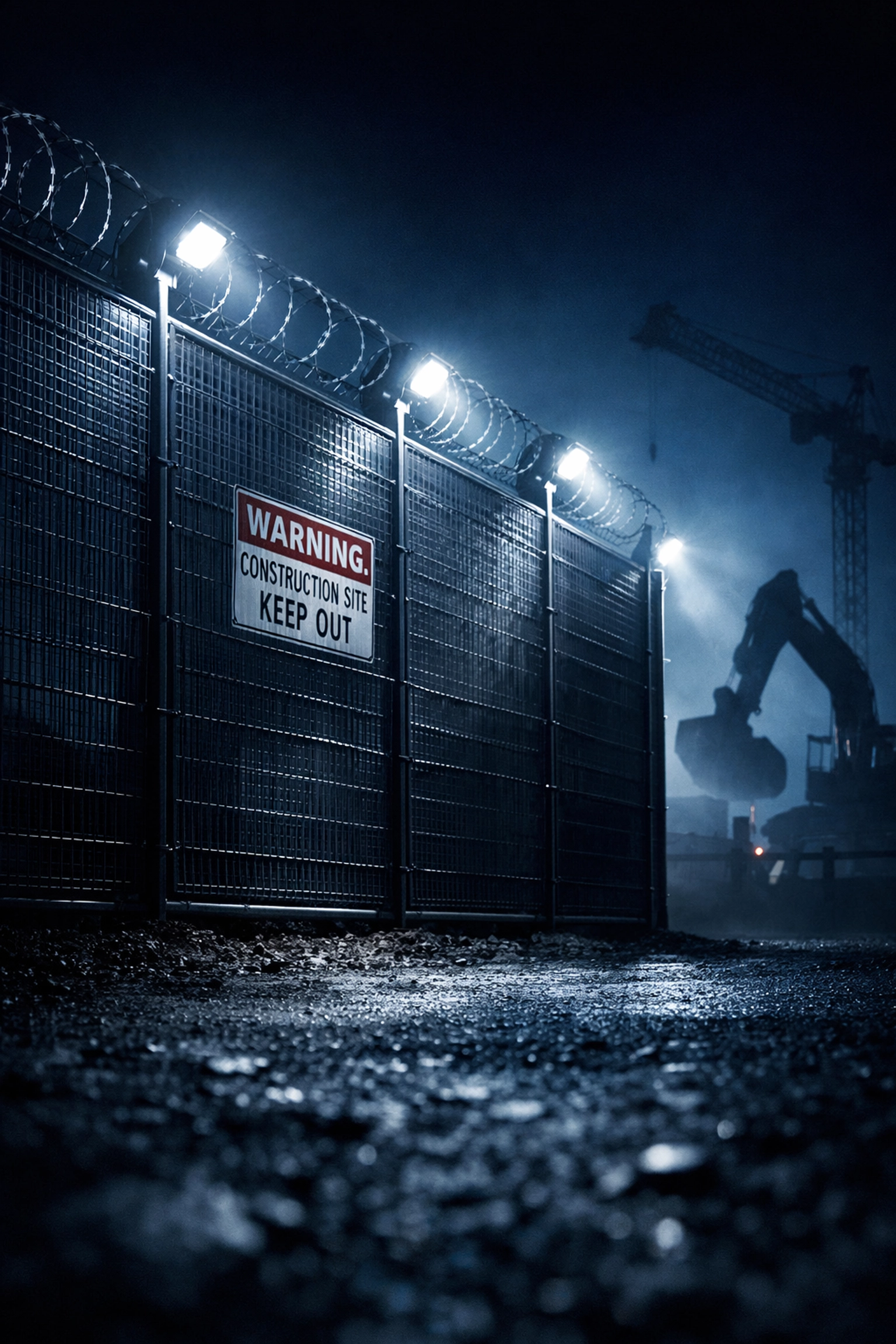
The Problem: Your chain-link fence has gaps. Lighting is inconsistent or non-existent. Shadows create perfect hiding spots. The perimeter: your first line of defense: has become your biggest vulnerability.
Poor lighting doesn't just make theft easier. It creates serious liability issues when accidents occur in poorly lit areas. It signals to potential thieves that your site is an easy target.
The Fix: Install anti-climb fencing around your entire perimeter with clear warning signage. Use motion-activated floodlights to eliminate shadows around gateways, material storage areas, and the entire fence line. Well-lit sites deter criminal activity: thieves prefer darkness.
Consider solar-powered or battery-backed lighting systems that continue operating during power outages. Design your site layout with security in mind: position trailers and equipment storage away from perimeter fences where thieves can work unobserved from the street.
A single monitored entry/exit point forces all traffic through a controlled checkpoint, making unauthorized access significantly more difficult.
Mistake #7: Using a "Set It and Forget It" Security Plan
The Problem: The security measures you implemented during site excavation don't address the risks during framing or fit-out. As your project progresses, valuable materials and equipment change: but your security strategy doesn't.
During excavation, heavy machinery is your primary concern. During framing, bulk material theft becomes the issue. During fit-out when copper wiring, HVAC units, and appliances are on-site, you're dealing with high-value, easily transportable items that thieves target specifically.
The Fix: Review and update your security plan at every major project milestone. Conduct monthly security assessments that identify new vulnerabilities as your site evolves.
When high-value materials arrive on-site, increase guard presence immediately. Adjust surveillance camera positions as site layouts change. Tighten access control when you're entering project phases with historically higher theft rates.
This adaptive approach requires working with a security provider who understands construction timelines and can scale services up or down as needed: without lengthy contracts or bureaucratic delays.
The Real Cost of Inadequate Construction Site Security
Beyond the direct financial loss from theft, inadequate security creates cascading problems: project delays when equipment needs replacement, budget overruns from expedited shipping costs, insurance premium increases after claims, and potential legal liability if unauthorized individuals injure themselves on your site.
One trespassing incident involving an injury can result in lawsuits that far exceed the cost of comprehensive security measures. When children wander onto an unguarded site and get hurt, your liability exposure is substantial.
Protecting Your Construction Site the Right Way
Construction site security isn't a luxury: it's a fundamental project requirement that protects your budget, timeline, and reputation. The seven mistakes outlined here are entirely preventable when you partner with experienced security professionals who understand the unique challenges construction projects face.
At Alta Security Services, we've spent 10+ years developing security strategies specifically for construction sites throughout Northern Virginia and Richmond, VA. We provide customized security solutions that adapt to your project phases, protect your valuable assets, and give you complete peace of mind.
Our professional security guards are trained in construction site protocols. We offer flexible scheduling that matches your project timeline: whether you need 24/7 coverage or strategic patrols during high-risk hours. We implement proactive measures that prevent incidents rather than simply responding to them.
Don't wait until theft or vandalism impacts your project timeline and budget. Contact Alta Security Services today for a customized security assessment of your construction site. We'll identify your specific vulnerabilities and implement comprehensive protection measures that safeguard your investment from ground-breaking to project completion.
Get your customized construction site security strategy now and protect what you've built.