

Richmond looks calm: until it doesn’t. One moment it’s a normal shift change at a medical center, a delivery at a loading dock, or a quiet evening at a multifamily building. The next moment it’s a trespasser in a stairwell, a contractor arguing at a gate, or a crowd pushing past a check-in table. That’s the real test: not whether a guard shows up, but whether the security program holds under pressure.
Choosing a security guard company in Richmond, VA isn’t about picking the lowest bid or the biggest name. It’s about selecting a team that prevents problems before they ignite: using the right people, the right training, and the right tools. Cut corners here and you’re effectively leaving your front door wide open: liability, downtime, and reputational damage included.
This guide breaks down the selection process like an insider: focused heavily on armed/unarmed guard services, with practical comparisons you can use today.
The real comparison: “Guard coverage” vs. “Risk management”
A guard is not a security plan. A uniform at the front desk can look reassuring: until you need de-escalation, incident documentation, or a fast, coordinated response.
When you compare companies, you’re comparing two very different models:
- Coverage-first vendors: fill posts, rotate personnel, keep costs low: often at the expense of consistency.
- Risk-managed providers: build post orders, train for your specific site, supervise performance, and document everything.
The difference shows up fast: fewer incidents, cleaner reports, calmer interactions, and fewer surprise headaches. That’s what you’re paying for.
Action step: Ask every company to explain how they prevent problems: not just how they respond after something happens.
1) Training is the foundation: anything else is decoration
Training is non-negotiable. The best Richmond security companies run structured training that covers both the basics and the reality of modern sites.
You want proof that officers can handle:
- De-escalation and conflict management (verbal judo, separation tactics, safe positioning)
- Access control discipline (credential checks, visitor validation, contractor accountability)
- Emergency response (medical response basics, fire safety awareness, evacuation support)
- Report writing (objective narratives that protect you during disputes, claims, or litigation)
- Customer service under pressure (especially for hospitals, high-rises, and public-facing sites)
Many reputable companies highlight training depth (first aid, fire prevention, customer service) and continuous improvement: because Richmond sites demand it. Your vendor must show that training is ongoing, not a one-time orientation.
Questions that force clarity:
- “How do you train for my site type: construction, medical, multifamily, retail?”
- “What does retraining look like quarterly?”
- “Who audits performance: field supervisors, account managers, both?”
2) Armed vs. unarmed: choose based on threat profile: not emotion
Armed vs. unarmed security is a risk decision, not a vibe. The right choice depends on what you’re protecting, the hours you operate, the history of incidents, and the consequences of a failure.
When unarmed guards are the stronger choice
Unarmed officers are often ideal for:
- Lobby and concierge posts where professionalism and approachability matter
- Access control at lower-risk sites
- Retail deterrence and customer-facing environments
- Schools and youth-adjacent locations where posture matters as much as presence
Unarmed doesn’t mean passive. A well-trained unarmed officer can prevent theft, enforce property rules, de-escalate conflict, and document incidents with a level of consistency that immediately reduces chaos.
When armed guards make sense
Armed security may be appropriate for:
- High-value assets (equipment yards, critical inventory, sensitive facilities)
- High-risk hours (late-night operations, isolated posts, recurring trespass)
- Documented violent incidents or credible threats
- Certain healthcare environments where volatility can spike quickly
Critical requirement: If a company offers armed guards, it must also offer tight supervision, clear use-of-force policies, and frequent scenario training. Armed coverage without disciplined oversight is not protection: it’s risk.
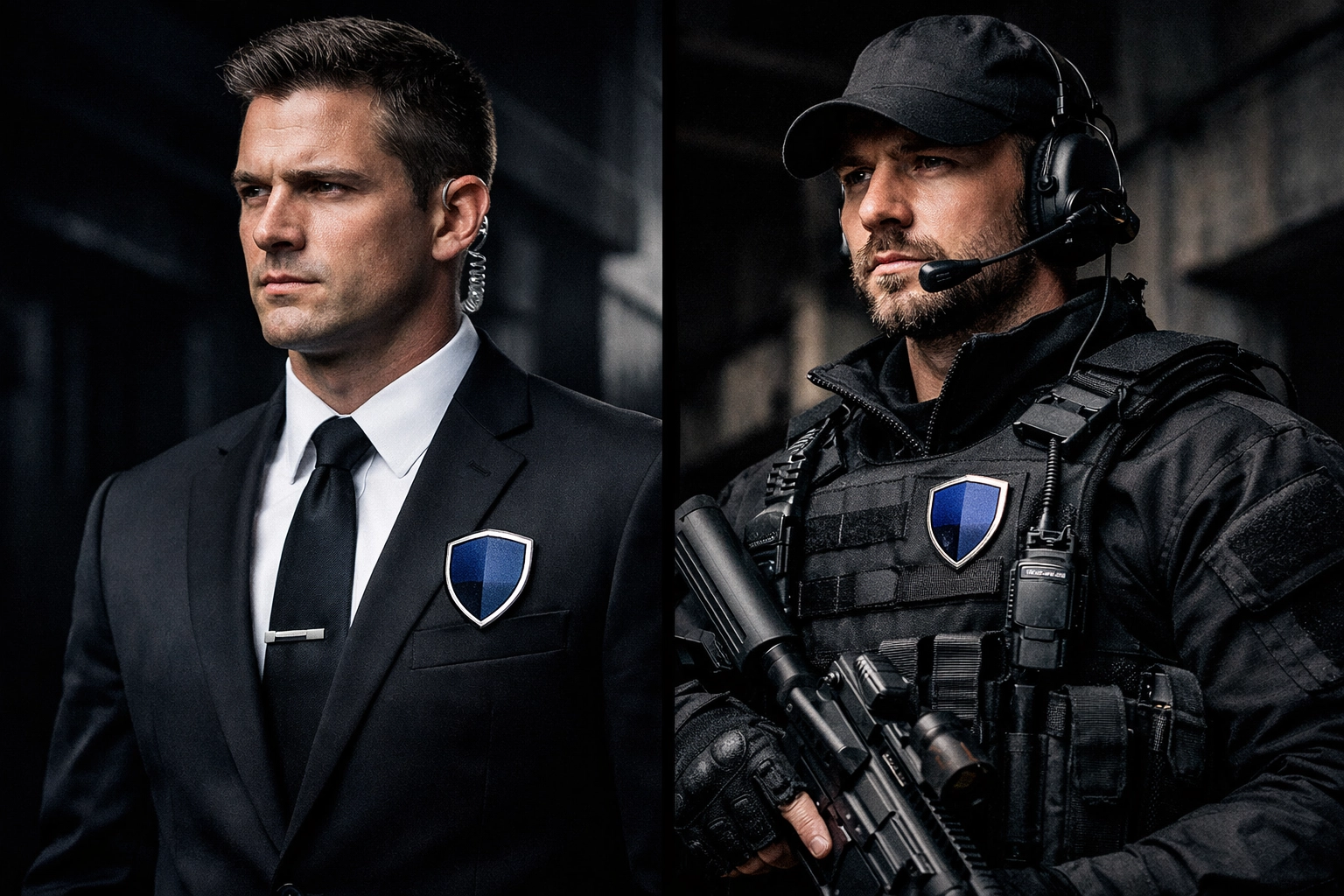
Action step: Ask for a threat assessment conversation before you sign. If a company pushes armed guards without understanding your site, that’s a red flag.
3) Richmond-specific experience: local knowledge drives faster, cleaner response
Local familiarity is operational advantage. A team that understands Richmond’s traffic patterns, event cycles, neighborhood dynamics, and typical call types will make better decisions faster.
Local knowledge impacts:
- Response timing (backup and supervisor arrival)
- Patrol planning (where visibility matters, where incidents cluster)
- Tenant and visitor management (what “normal” looks like at your property)
- Coordination with property staff (smooth communication beats reactive scrambling)
You’re not just hiring bodies: you’re hiring judgment. Richmond sites reward the vendors who’ve seen the patterns before and know how to shut them down early.
4) Technology is your force multiplier: if it’s actually used
Modern security runs on documentation and visibility. Technology should make guards more accountable and make your reporting cleaner: without turning your site into a surveillance lab.
Look for practical tools like:
- Body-worn cameras (where appropriate and legally compliant)
- Digital incident reports (time-stamped, photo-supported, easy to retrieve)
- Guard tour systems (QR/NFC checkpoints to verify patrols)
- Real-time dispatch communication (clear escalation pathways)
- Marked vehicle patrol options for deterrence and rapid checks
Some Richmond companies market tech aggressively: and that can be good: but tech only matters if leadership enforces it. A vendor can own a stack of hardware and still run sloppy operations.
Ask this directly:
- “Do you audit tour scans?”
- “Can I receive weekly incident summaries?”
- “How fast do you deliver footage or reports after an incident?”
For properties needing visible deterrence and flexible coverage, consider a structured patrol program like marked vehicle patrol security: especially for large footprints, parking assets, and after-hours risk.
5) Supervision and accountability: the part most companies hope you won’t ask about
The guard you see is only half the service. The other half is what happens behind the scenes: supervision, coaching, scheduling discipline, and corrective action.
Strong security vendors have:
- Field supervisors who actually visit sites (not just “available by phone”)
- Post order compliance checks (uniform, gear, log accuracy, positioning)
- Relief staffing plans (coverage when someone calls out)
- Escalation protocols (who gets called, when, and why)
Weak vendors hide behind the contract and react only when something goes wrong: meaning you become the supervisor. That’s not what you’re paying for.
Action step: Require a written supervision cadence (e.g., random checks + scheduled reviews) before you sign.
6) Contract flexibility: long-term value beats long-term lock-in
Good security companies keep clients through performance: not penalties. Month-to-month structures exist in the market, and many buyers prefer them. But flexibility means nothing if standards are vague.
Instead of obsessing over term length, focus on:
- Clear KPIs (incident reporting timeliness, patrol verification, response expectations)
- Defined roles (what guards do, what they do not do)
- Post order customization (site-specific rules, contact lists, emergency steps)
- A clean exit process (handover documentation and continuity)
Bottom line: The best agreement is the one that forces operational clarity: because clarity prevents problems.
7) Industry fit matters: especially for hospitals, construction, and events
A security company can be “good” and still be wrong for your environment. Richmond has a wide mix of risk profiles, and you need a provider that already understands your world.
Hospitals and medical centers
Healthcare security is a category of its own: emotion, stress, and unpredictability collide. Your vendor must be comfortable with:
- Visitor management under pressure
- De-escalation in confined spaces
- Coordinating with clinical staff
- Documentation that supports administration decisions
If your site is medical, start here: medical centers & hospitals security.
Construction sites
Construction security fails in the details: gate control, after-hours patrol patterns, asset protection, and preventing “quiet” theft like tools, fuel, and copper. The best teams understand:
- Perimeter integrity
- Vendor/contractor accountability
- Lighting and visibility issues
- Weekend and night vulnerabilities
Special events
Event security requires speed, communication, and crowd control: not just a uniform. Look for structured planning:
- Entry screening and queue control
- Clear chain of command
- Rapid incident containment
- Post-event reporting for stakeholders
For planned gatherings, see: special events security.

8) “Lowest price” is often the most expensive decision you’ll make
Security is one of those categories where cheap shows up later: in stolen assets, tenant complaints, injury claims, and management time burned on vendor issues.
Common hidden costs of bargain security:
- High turnover and inconsistent coverage
- Poor report quality (hurts you in disputes)
- Weak deterrence (repeat trespass and theft)
- Slow supervision response
- Liability exposure from sloppy procedures
Pay for professionalism upfront and you avoid paying for chaos later. Not optional: a critical investment.
9) The 10-point Richmond security company checklist (use this in every interview)
Bring this list into your vendor calls. It forces real answers fast.
- Site-specific plan: Do they offer a documented post order and risk walkthrough?
- Training depth: Do they train beyond basics: de-escalation, emergency procedures, documentation?
- Armed/unarmed fit: Can they justify the recommendation based on risk?
- Supervision cadence: How often do supervisors visit and audit?
- Staffing reliability: How do they handle call-outs and coverage gaps?
- Technology use: Are tours/reports time-stamped and auditable?
- Reporting quality: Can they provide sample reports (redacted)?
- Communication: Who is your point of contact and what’s the escalation ladder?
- Local capability: Do they have proven operations in Richmond and surrounding areas?
- Performance accountability: What happens when an officer misses a requirement?
Bold move: Ask them to answer these in writing. Serious providers won’t flinch.
A practical “comparison table” you can run in your head
When you’re choosing between vendors, this is what you’re really comparing:
- Presence (uniform at a post) vs. Prevention (deterrence, consistency, patrol verification)
- Promises (sales talk) vs. Proof (training logs, sample reports, supervision records)
- Coverage (anyone will do) vs. Fit (right officer profile for your environment)
- Reaction (call after an incident) vs. Proactive control (access rules enforced daily)
Choose prevention. It costs less than regret.
Why Alta Security Services is built for Richmond clients who can’t afford mistakes
You don’t need a security company that “tries.” You need one that performs: day shift, night shift, weekends, and the messy moments in between.
At Alta Security Services, the work is built around 10+ years of experience supporting clients across Northern Virginia and Richmond with dependable, professional guard coverage: especially armed and unarmed security, mobile patrol, and site-specific programs. Officers are backed by modern tools and proactive procedures designed to reduce incidents, improve documentation, and keep your property running smoothly.
If you’re comparing providers right now, start with a clear view of services and capabilities: Alta Security Services – Services. If you want to confirm coverage in your area, check: Areas We Serve.
Don’t wait for the next incident to “prove” you needed better security( get a site-specific plan today.)